Materials Research
Self-Healing Polymer Coating
Thermally-triggered self-healing coating with a bioinspired layered microstructure, recovering 85% of as-cast hardness after damage.
Overview
Conventional automotive clear coats sustain permanent damage from surface scratching. This project investigated a self-healing alternative capable of restoring mechanical properties after damage without external repair.
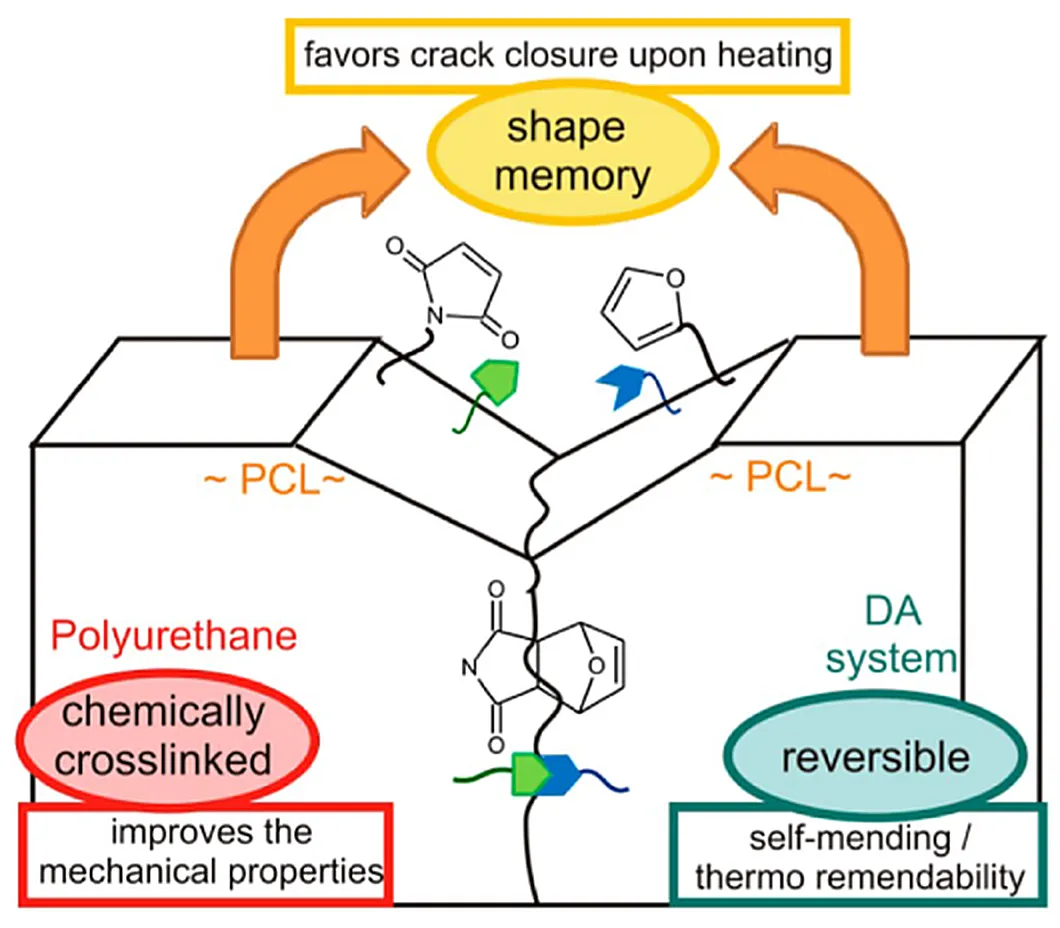
The formulation uses a layered microstructure inspired by nacre (mother-of-pearl) — rigid platelets in a compliant matrix — produced via a specialized additive-manufacturing process. Mild, localized heating mobilizes the matrix chemistry and closes microcracks.
Testing across multiple damage-and-heal cycles showed 85% recovery of original hardness and a coating 60% more resistant to crack propagation than the unmodified baseline, at a healing threshold low enough to be practical outside a lab.
Scope of work
- Formulated and produced the coating using a custom 3D-printing process
- Designed the damage-and-heal test protocol
- Ran comparative hardness and fracture-resistance testing
- Documented results against the unmodified baseline coating