Human-Centered Design
Assistive Behavioural-Therapy Aid
First-year cornerstone design project: a discreet assistive-technology concept supporting stimulus generation for Applied Behaviour Analysis therapy with autistic children.
Overview
My first-year cornerstone design project, run to a real client brief: assistive technology to support stimulus generation for Applied Behaviour Analysis (ABA) — a behavioural therapy used with children on the autism spectrum.
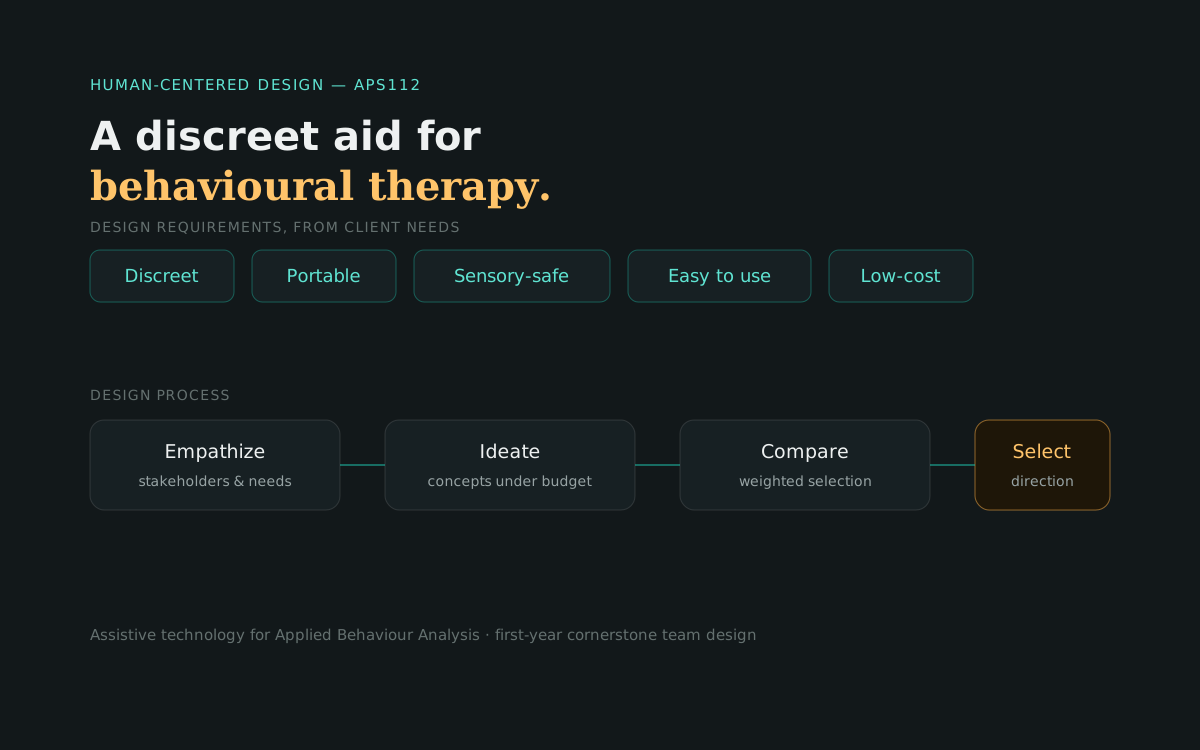
As team secretary I owned the documentation — meeting minutes, requirements tracking, and stakeholder research — and contributed to the design itself. We distilled the client’s needs into weighted requirements: discreet, portable, sensory-safe, easy to use, and low-cost.
Working under a fixed budget constraint, the team generated concept designs, compared them with a weighted decision matrix, and recommended a direction. It was where I first learned to run a human-centered design process from an ambiguous need to a defensible recommendation.
Scope of work
- Researched stakeholders and the ABA behavioural-therapy context
- Translated client needs into weighted design requirements
- Generated conceptual designs within a fixed budget constraint
- Compared concepts with a weighted decision matrix